

IT Infrastructure Solutions 101: A Beginner’s Guide to Mastering Your Business Tech Foundation

In the modern digital landscape, the success of a business is no longer tied solely to its product or service quality. Instead, the silent engine driving every transaction, communication, and data point is your technical foundation. For many business owners, terms like "servers," "latency," and "structured cabling" can feel like a foreign language. However, understanding and implementing the right IT infrastructure solutions is essential for maintaining a competitive edge, ensuring 99.9% uptime, and preparing your organization for rapid scalability.
At Voihost, we view IT not as a cost center, but as a strategic asset. This guide will demasculate the complexities of technical systems and provide a roadmap for mastering your business tech foundation.
What is IT Infrastructure?
At its core, IT infrastructure is the composite framework of hardware, software, network resources, and services required for the existence, operation, and management of an enterprise IT environment. Think of it as the plumbing and electricity of your digital office. Without high-quality IT infrastructure solutions, your business risks data silos, frequent downtime, and vulnerability to external threats.
A robust infrastructure allows your team to communicate seamlessly, access data instantly, and deliver services to your clients without interruption. Whether you are a small startup or an established enterprise, your infrastructure must be designed to be resilient, secure, and flexible.
The Hardware Pillar: The Physical Foundation
The hardware component of your infrastructure consists of the physical devices you can touch. While the world is moving toward the cloud, physical hardware remains the bedrock of all computing.
Servers and Storage
Servers are the workhorses of your business. They host your website, manage your emails, and store your mission-critical data. Depending on your needs, you might utilize shared hosting for basic web presence or dedicated hosting for high-performance requirements that demand exclusive resource allocation.
End-User Devices
This includes the laptops, desktops, and mobile devices your employees use daily. Managing the lifecycle of these assets is crucial for maintaining productivity. Outdated hardware leads to "technical debt," where the cost of maintaining old equipment outweighs the cost of upgrading to modern, efficient systems.
Peripherals and Facilities
Printers, external drives, and even the cooling systems in a server room are part of your hardware stack. If you manage an on-premises data center, ensuring proper power supply and climate control is a non-negotiable aspect of IT infrastructure solutions.

Networking: The Digital Nervous System
If hardware is the body, the network is the nervous system. Networking components allow for the flow of data between hardware devices and the outside world. Without a fast, stable network, even the most powerful servers become useless.
Routers, Switches, and Firewalls
- Routers: These direct data traffic between different networks, connecting your office to the internet.
- Switches: These connect devices within a single network, such as connecting your office computers to a local printer or server.
- Firewalls: These serve as the primary gatekeeper, monitoring incoming and outgoing traffic to block unauthorized access.
The Importance of Structured Cabling
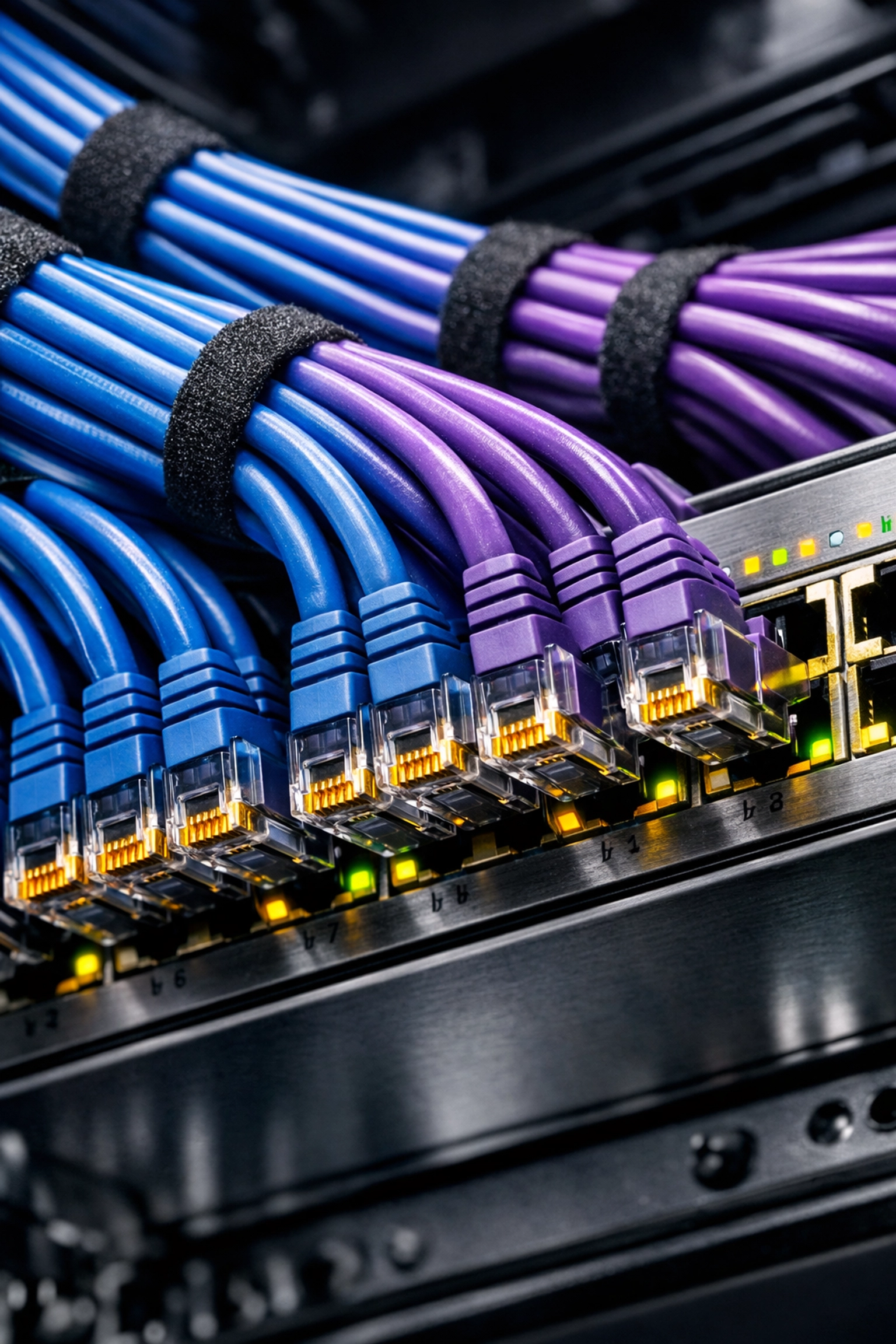
One often overlooked aspect of IT infrastructure solutions is the physical wiring. Structured cabling is the backbone of any wired network. Poorly organized "spaghetti" wiring leads to signal interference, difficult troubleshooting, and potential fire hazards. Implementing a standardized cabling system ensures that your network can handle high-bandwidth applications without lagging. You can learn more about how we handle these physical installations at Voihost Structured Cabling.
Connectivity and Low Latency
In a global market, speed is a currency. High-performance networking solutions reduce latency, ensuring that your VoIP calls are crystal clear and your web applications respond instantly to user inputs.
Software: The Intelligence of the Infrastructure
Hardware and networking provide the "where" and "how," but software provides the "what." The software layer of your IT infrastructure consists of the applications and operating systems that allow your business to function.
- Operating Systems (OS): The base software (like Windows Server or Linux) that manages hardware resources.
- Enterprise Resource Planning (ERP) & CRM: Systems that manage business processes and customer relationships.
- Productivity Suites: Tools like Office 365 or Google Workplace that facilitate daily collaboration and communication.
- Specialized Applications: Managed platforms such as WordPress hosting that allow businesses to maintain a professional web presence with minimal technical overhead.
By integrating these software components into your IT infrastructure solutions, you create a unified environment where data flows freely between departments, reducing manual entry and human error.
Cloud vs. On-Premises: Choosing Your Model
One of the most critical decisions in building your tech foundation is determining where your data and applications will live. Modern IT infrastructure solutions generally fall into three categories:
1. Traditional On-Premises
All hardware is located within your physical office. This offers maximum control and data sovereignty but requires significant capital expenditure (CAPEX) for hardware and ongoing maintenance.
2. Cloud-Based Infrastructure
Resources are hosted by a provider like Voihost and accessed via the internet. This model replaces upfront costs with a predictable operating expense (OPEX) and offers unparalleled scalability. As your business grows, you can increase your storage or processing power with a few clicks.
3. Hybrid Infrastructure
A combination of both, where sensitive data might stay on-site while customer-facing applications live in the cloud. This is often the preferred choice for businesses undergoing digital transformation, as it balances security with flexibility.

Security and Business Continuity: Protecting the Foundation
A foundation is only as good as its ability to withstand a storm. In the digital world, "storms" come in the form of cyberattacks, hardware failures, and natural disasters. Proactive IT infrastructure solutions must include a comprehensive security and recovery strategy.
Cybersecurity Layers
A multi-layered approach to security is the only way to mitigate modern risks. This includes:
- Anti-virus and Anti-malware: Protecting endpoints from malicious software. Explore our security solutions here.
- Access Control: Ensuring that only authorized personnel can enter physical server rooms or access digital files. Access control systems are vital for regulatory compliance.
- Security Cameras: Physical surveillance of your IT assets to prevent tampering or theft.
The Role of Cloud Backup
Data loss can be fatal for a small business. Implementing a robust cloud backup strategy ensures that even if your local hardware fails, your data is safe and recoverable. Business continuity planning involves more than just backing up files; it involves creating a "disaster recovery" protocol that outlines exactly how to restore operations in the shortest time possible.

Implementing Your IT Infrastructure Strategy
Mastering your tech foundation is not a one-time event; it is a continuous process of assessment and optimization. To implement effective IT infrastructure solutions, follow these strategic steps:
Step 1: Conduct a Health Check
Before adding new components, you must understand your current state. Audit your hardware for age, check your software for license compliance, and test your network speeds. Identify bottlenecks where slow equipment is hindering employee performance.
Step 2: Align with Business Goals
Your IT strategy should mirror your business strategy. If you plan to expand your workforce by 50% next year, your IT infrastructure solutions must be capable of scaling without a complete overhaul. Focus on future-proofing your investments.
Step 3: Prioritize Security
Never treat security as an afterthought. Build encryption, multi-factor authentication, and firewalls into the very fabric of your infrastructure from day one.
Step 4: Partner with Experts
Most business owners do not have the time to become IT experts. Partnering with a trusted advisor like Voihost allows you to focus on your core business while we manage the complexities of hosting, networking, and security.
Summary: Building for the Future
Your IT infrastructure is the platform upon which your business growth is built. By investing in high-quality hardware, optimized networking, and robust security, you create a resilient environment that can adapt to any challenge. From structured cabling in your office to dedicated hosting in the cloud, every component of your IT infrastructure solutions plays a role in your ultimate success.
In today's fast-paced market, a "good enough" tech foundation is a liability. Aim for excellence, prioritize reliability, and ensure your infrastructure is ready for the demands of tomorrow.
If you’re ready to strengthen your business tech foundation, we are here to help. Whether you need a simple domain name or a complex multi-site networking strategy, our team provides the expert guidance you need to thrive.
Ready to optimize your tech stack? Contact us today to schedule an IT infrastructure health check and discover how we can help your business scale securely.
Best regards,
Vadim Polonski
BSS, Voihost
